liners for ball mill
2022/9/30

Liners for Ball Mill: Ball Mill Liners:
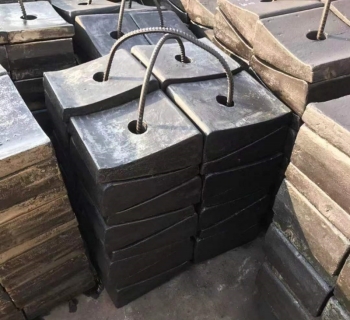
Ball mill liners are wear-resistant protective plates installed on the inner surfaces of ball mill cylinders, end covers, and other components. They are not just simple "inner liners" but one of the core components ensuring the efficient and stable operation of ball mills.
Main Functions
The main functions can be summarized as follows:
Protecting the Cylinder: Prevents direct impact and wear of the ball mill’s steel cylinder by grinding media and materials, extending the service life of the main equipment.
Improving Grinding Efficiency: Through the design of different lifting bar shapes, the liners can lift grinding media (steel balls, steel forgings, etc.) to a certain height and then throw them down, realizing "cascade grinding" or "toe-crushing grinding" instead of simple sliding, thereby greatly improving impact and grinding efficiency.
1. Main Types of Liners
Liners can be classified in two ways: by shape and function, and by material.
(I) Classification by Shape and Function
Flat Liner: Features a flat surface and mainly serves a protective purpose. There is relatively large relative sliding between the grinding media and the liner, resulting in a strong grinding effect but weak lifting capacity. It is rarely used alone nowadays.
Wave Liner: Suitable for fine grinding chambers. It has a low wave crest height, resulting in smaller impact force but a large grinding area, making it ideal for grinding materials to finer particle sizes.
Step Liner: One of the most commonly used types. Its surface is stepped, offering strong lifting capacity to throw grinding media to a high position, generating large impact force. It is particularly suitable for the coarse grinding chamber (first chamber) of ball mills.
Ribbed Liner (also known as Batten Liner): Protruding steel bars (lifting bars) are installed on a flat liner. The lifting bars are used to lift grinding media, while the flat part protects the cylinder. It delivers extremely strong impact force.
Classifying Liner: Usually installed in fine grinding chambers (second chamber and above). It has a special shape (e.g., oblique corrugated type) that can automatically separate larger-sized grinding media to the mill inlet end and retain smaller ones at the outlet end, achieving more reasonable gradation, improving grinding efficiency, and reducing energy consumption.
End Cover Liner: Installed on the end cover of the ball mill, mainly for protective purposes.
(II) Materials
High Manganese Steel (ZGMn13)
Features: A traditional material with extremely high toughness (impact resistance) and good work hardening performance. Its surface becomes harder and more wear-resistant after being subjected to strong impact.
Application Scenarios: Suitable for working conditions with extremely large impact force, such as the coarse grinding chamber (first chamber) of large ball mills.
Disadvantages: Under medium and low impact working conditions, the work hardening effect is insufficient, and its wear resistance is inferior to that of some medium carbon alloy steels.
Alloy Steel (Medium/Low Alloy Wear-Resistant Steel)
Features: By adding alloying elements such as Cr, Mo, and Ni, it achieves high surface hardness (HRC45-55 or higher) and good toughness.
Application Scenarios: Suitable for fine grinding chambers (second chamber, third chamber) with small impact force and small-sized mills. It is often used in combination with alloy steel liners.
|
C Name(名称)
|
Brand(牌号) |
Chemical composition(化学成分)% |
|||||
|
|
|
Carbon (C) |
Silicon (Si) |
Fierce (mn) |
Chromium (Cr) |
Sulfur (S) |
Phosphorus (P) |
|
PO 衬板scaleboard |
ZGMn13Cr2 |
1.1-1.4 |
0.3-1.0 |
16-19 |
1.0-2.0 |
≦0.06 |
≦0.08 |
|
衬板scaleboard |
ZG70CrMn |
0.68-0.78 |
0.2-1.5 |
0.8-1.2 |
3.0-3.5 |
≦0.024 |
≦0.023 |

宁国市永科祥新材料科技有限公司 版权所有 皖ICP备19021454号-3 免责声明